
Different Types of Electric Cars in Pakistan
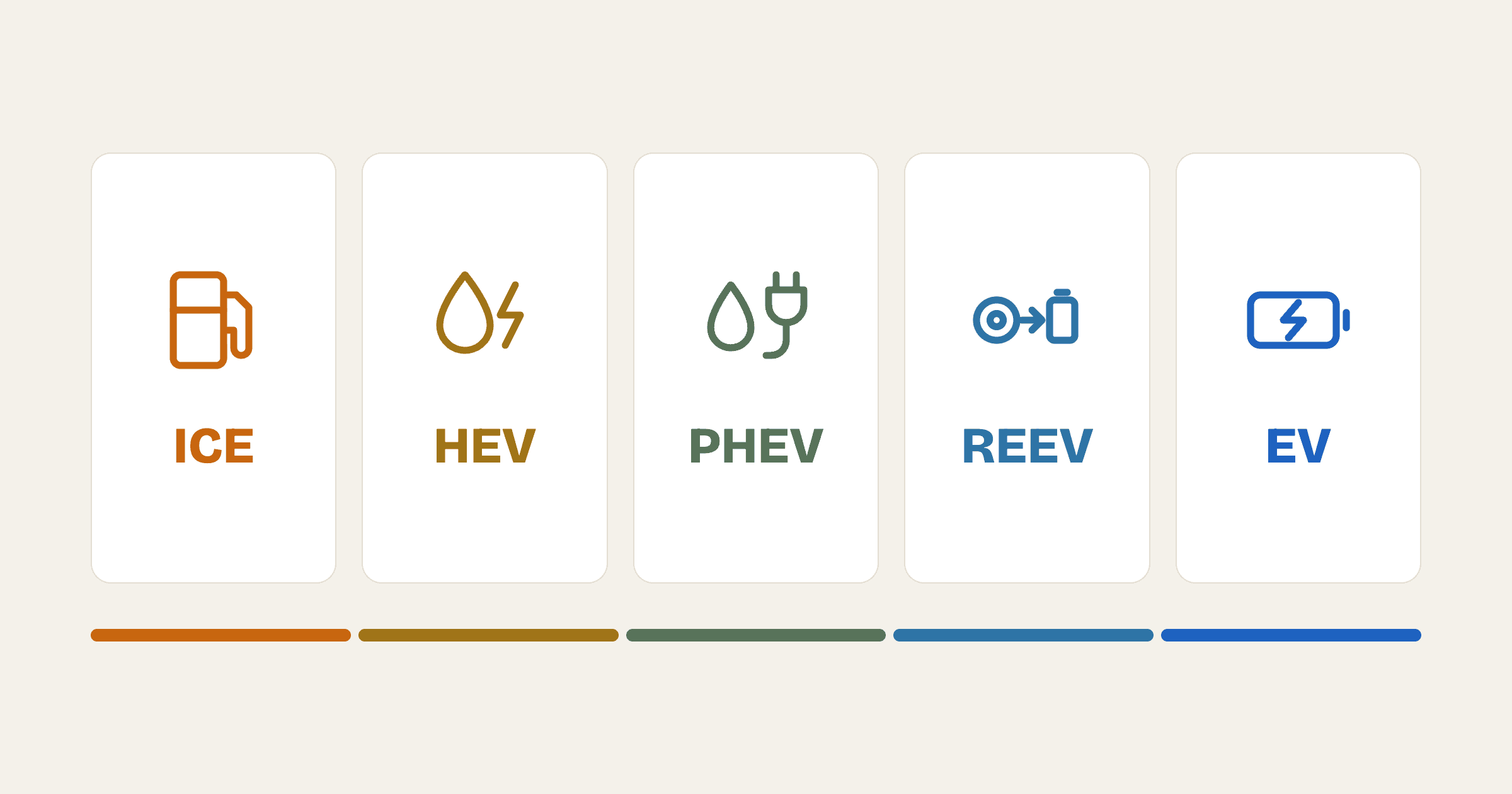
Cars as a concept have come a long way all the way from what Carl Benz had created to what we have now in the markets around the world. The evolution of automobiles is fascinating to say the least. Whether it is the form factor, or the visual aspects, the engineering behind it all is amazing. There are so many aspects of the motor evolution to talk about but for this blog, we are going to talk a little about the basic engine and power units of the modern cars; from international combustion engines to all the way to fully electric and everything in between.
Pakistan has seen an influx of electric cars lately. From random imported Tesla cars to almost everything the Chinese have to offer. So start from the basics, and move to the latest and greatest.
ICE
ICE or internal combustion engines is what started it for cars. Yes there were steam engines at the dawn of motoring a century or so ago but internal combustion engines are still in use in various configurations all over the world whereas the steam has fizzled in the dust of time.
The idea is simple. You mix some combustible fluid like petrol, diesel, or even LPG and CNG, mixed with some air, since you need oxygen to fire a flame, give it either a spark or compress it so hard that it combusts inside a cylinder while pushing the pistons down and making a rhythm and motion and a cycle that converts thermal reaction into a rotational movement.
From the most basic and smallest motorcycles like Honda Cub all the way to most expensive super cars like Koenigsegg and Bugatti, the recipe is the same. From Mehran to Civic RS, Internal combustion engines move the world.
Electric
The extreme other engine of electric is an all electric motor. Zero emission, zero moving parts; all electricity. The idea is very simple, you get some batteries, hook them to some electric motors, charge them batteries, push a button, in this case a throttle, and off you go.
But this simple idea suffers from what is widely known as range anxiety. The charging is slow, the batteries are limited to storage, and the charging infrastructure is still not as widely laid out as the good ol’ gas station. The fossil fuel has like a century of advantage over electricity.
You simply put the electric wire plug in your vehicle, and charge the batteries like you would charge your cellphone or any other equipment with batteries to store electricity for later use. The electric motors then use the power from the batteries to drive the vehicle. Downside is, as mentioned above, the charging infrastructure is not as wide and common as the regular fuel stations and also the fact the charging is kinda slow. It takes hardly a few minutes to fill the fuel tank of your vehicle. But batteries take time to charge.
Another downside when it comes to charging these vehicles is how powerful the charging station is. Your regular 220v electric socket at your house is not going to charge your electric vehicle as quickly as a commercial or dedicated charging station. And these power stations cost extra money to install if you want to do it at your home and the commercial ones are either busy with other vehicles being charged or might not be in your local vicinity.
Some of the electric cars available in Pakistan are various imported Tesla models, BYD Atto and Seal, Deepal, Jaecoo, and MG ZS EV to name a few.
Hybrid
So you like petrol engines, but would also like some benefits of electric vehicles like better fuel economy. For that you can have a hybrid system where an electric motor is integrated into the drivetrain of an ICE vehicle in a way that it gives you seamless transition of power between the two opposing systems.
To simplify it, the electric motors only do some of the driving, rest is done by the engine. Batteries are charged when the engine is running and/or the car is driving. The range of the batteries is limited. In some vehicles with regenerative braking, the batteries also charge when you apply brakes or are driving downhill.
Toyota is undoubtedly the leader of hybrid systems with their flagship model in the shape of Prius. The system worked so well for Toyota that they started offering it in the luxury cars like Toyota Crown as well as now in their heavy-duty offroaders like the new Toyota Hilux and Land Cruiser.
Other known hybrid electric systems include Honda’s IMA (Integrated Motor Assist) which was later converted to i-MMD (Intelligent Multi-Mode Drive system), and both Ford and Subaru offer the similar system like the Toyota’s.
PHEV
The second iteration of a hybrid is PHEV which stands for plug-in hybrid vehicles. The good thing about PHEVs is that, as the name suggests, you can plug them in your regular power socket and charge the batteries. The idea is that you don’t need just the internal combustion engine to charge the batteries and like full electric vehicles, you can charge them independently.
But they operate mostly the same as the hybrid vehicle. Same theory behind the mechanical, but you get added features in the form of a normal charging system. PHEV vehicles come with bigger batteries. Unlike a regular hybrid vehicle, you do not need the car’s internal combustion engine to start the car. In some PHEV vehicles, the system is so clever that it would not let the engine fire up for the vehicle to start driving. In fact the engine would not even start until the batteries drain out or if you are really gunning it. The electric range of plug-in hybrid vehicles to run on batteries is far superior than the normal HEVs (hybrid electric vehicle).
Other than the benefit of the extended range, you also get better speeds. Normal hybrid vehicles will not cruise at highway speeds on batteries. In fact they are fairly limited when it comes to speed as well as the distance these cars can drive to. But plug-in hybrid vehicles usually can not only drive for longer but also faster thanks to their bigger batteries.
Some of the commonly available PHEVs in Pakistan are Toyota Prius PHEV, Jaecoo J7 PHEV, Haval H6 PHEV, and Chery Tiggo 8 and 9 PHEV, and BYD Shark PHEV to name a few.
REEV
And then comes REEVs which stands for Range-Extended Electric Vehicle. They are also sometimes known as EREV.
In this system, unlike electric, the vehicle comes with an internal combustion engine. But unlike a hybrid system, the engine does not directly drive the vehicle. The engine is used as a generator and in fact charges the batteries of the car while the batteries power the electric motors to make the vehicle move. There is not direct mechanical linkage between the engine and the wheels.
Usually a small and fuel efficient engine is used for generating the electricity so that there is a constant supply of electricity to charge the batteries. This kills the feeling of you running out of charge while on a long route. But since there is no direct load on the engine, the fuel consumption is highly optimised to keep the engine running just enough so the batteries are charged to optimal levels.
On top of that small portable generator of an engine, you also get the option of plugging your vehicle in the wall socket or a dedicated charging station to charge the batteries just like in the plug-in hybrid vehicle.
Some of the REEV models you can find in Pakistan include Nissan Note e-Power and Deepal S05. Also there is the upcoming XPeng L03 and Forthing Friday REEV.
So this is pretty much for this blog. Let us know what you think and if you are looking for any of these vehicles, head over to carmandi.pk and bid and buy your next dream car.