Used Car Imports Continue in Pakistan Despite Restrictions – What Buyers Need to Know
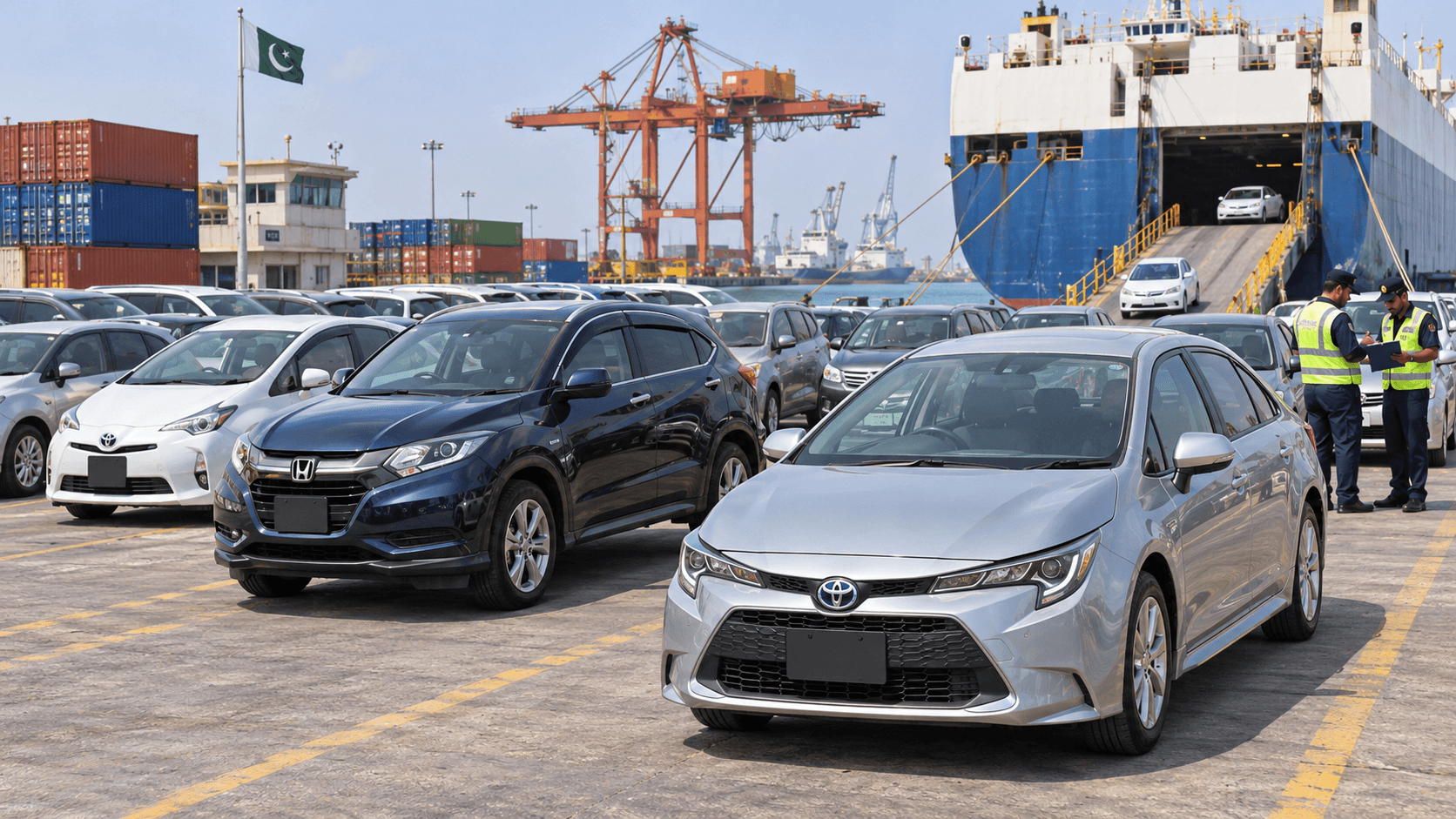
Pakistan’s used-car imports remain active despite tighter government restrictions, with more than 2,000 vehicles reportedly arriving under the Overseas Pakistani Gift Scheme in October 2026. The development has renewed debate over vehicle imports, competition and the impact on local car manufacturers.
According to a report published by Dawn on November 10, 2026, auto vendors said more than 2,000 used vehicles entered Pakistan under the Gift Scheme during October. The continued inflow comes despite the government’s efforts to tighten import regulations and prevent the misuse of schemes originally designed for overseas Pakistanis.
Government Tightens Used-Car Import Rules
The government abolished the Personal Baggage Scheme in January 2026 through SRO 61(I)/2026. However, the Gift and Transfer of Residence schemes remain available under stricter conditions.
Under the revised rules, overseas Pakistanis must meet a minimum stay-abroad requirement of 850 days during the preceding three years. The interval between vehicle imports under the schemes has also been increased to 850 days.
Another important change is the one-year transfer restriction. Vehicles imported under the Gift or Transfer of Residence schemes cannot be transferred to another person for one year from the date of importation.
These measures are intended to discourage commercial misuse and ensure that the schemes benefit genuine overseas Pakistanis and their families.
Why Are Used-Car Imports Still Increasing?
Despite tighter personal import conditions, used vehicles continue to enter Pakistan particularly through the Gift Scheme. The scheme allows eligible overseas Pakistanis to send a used vehicle to a qualifying family member in Pakistan, subject to applicable import regulations, duties and taxes. Commercial imports provide another route for bringing second-hand vehicles into the market.
The number of vehicles imported through the scheme rose from just seven in May 2026 to 2,238 in September. A separate Dawn report published in October highlighted that 2,276 vehicles were imported under the Gift Scheme in September, according to Commerce Ministry data.
The increase has created mixed reactions across the automotive industry. Importers believe greater competition can provide buyers with more vehicle choices. Meanwhile, local parts manufacturers have raised concerns about the impact of imported vehicles on domestic production and localisation under the new auto policy announced last week.
For local assemblers such as Indus Motor, Pak Suzuki and Honda Atlas, increased competition could put pressure on pricing, product quality and customer offerings.
What Does This Mean for Car Buyers?
The continued arrival of imported used vehicles could provide Pakistani buyers with more options, particularly those interested in Japanese and other foreign-made vehicles.
Increased competition may also put pressure on sellers to offer more competitive prices. However, lower car prices are not guaranteed, as import duties, taxes, currency exchange rates, shipping costs and local market demand also influence vehicle prices.
What Should Buyers Check Before Purchasing an Imported Car?
For customers considering an imported used vehicle, checking its legal status is just as important as checking its condition.
Before making a payment, buyers should:
– Verify the vehicle’s customs clearance and import documents.
– Check its registration details and registered owner’s identity.
– Confirm that the one-year transfer restriction has expired, where applicable.
– Verify the vehicle’s chassis and engine numbers.
– Have the vehicle inspected by a trusted mechanic.
It is also important to compare the total cost of an imported vehicle with that of a locally assembled alternative rather than making a decision based only on its advertised price.
Pakistan’s used-car market continues to evolve as the government balances consumer choice with protection for local manufacturing. For car buyers, increased imports may offer more choices, but a vehicle’s legal documentation and transfer eligibility should remain top priorities.